Arctostaphylos uva-ursi
Kinnikinnick
Ericaceae
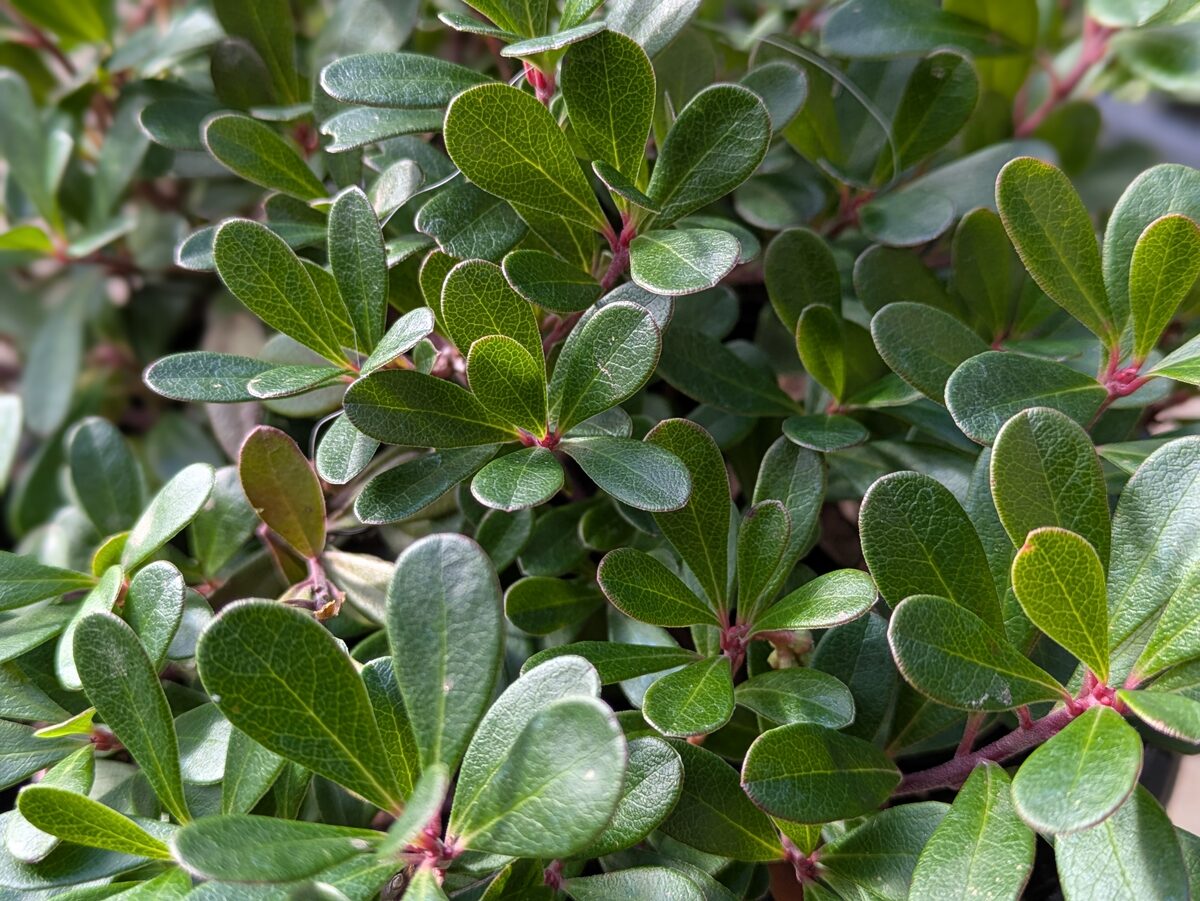
Acquired from SYG in Pullman, WA in early spring 2026. Planted as a low groundcover in a dry, sunny section of the cold-hardy garden. Prostrate and spreading, reaching 6–12 inches tall and 3–6 feet wide at maturity. First season focused on root establishment — minimal water, no fertilizer. Native to the Pacific Northwest and well-suited to zone 6b conditions; no winter protection required.
Foliage, Flowers, and Fruit
Leaves are leathery, approximately 1 inch long, teardrop-shaped, and dark glossy green. Foliage turns bronze in winter and reverts to green by spring — a reliable seasonal marker. Stems are reddish with papery, exfoliating bark that adds winter interest.
Flowers appear in spring: small, urn-shaped, white to pale pink, less than ½ inch. Followed by small drupes (0.2–0.5 inches) that are green through summer and ripen to bright red by fall. Berries persist through winter and into the following season if not consumed by wildlife.
Care
Requires lean, acidic, well-drained soil — tolerates sandy, rocky, and gravelly conditions where other groundcovers fail. Intolerant of clay, compaction, or high soil nutrients; avoid fertilizing. Drought-tolerant once established; overhead irrigation promotes disease and should be avoided — use drip if supplemental water is needed. Slow to establish from transplants; expect the first season to be spent primarily on root development. Space plants 12–24 inches apart; spreads by layering to form a dense mat over time. Performs poorly in wet, humid summer climates (eastern U.S.) due to susceptibility to root disease.
Wildlife Value
Berries are eaten by bears, birds, and small mammals and persist through winter as a food source. Flowers attract hummingbirds, bees, and other pollinators. Serves as a larval host plant for three butterfly species: Hoary Elfin, Brown Elfin, and Freija Fritillary.
Pests and Diseases
Kinnikinnick is susceptible to several fungal diseases and one significant pest, all manageable primarily through cultural practices. Overhead watering is the common thread — eliminating it reduces risk across the board. The cultivar ‘Massachusetts’ shows documented resistance to both leaf gall and leaf spot.
Leaf gall (Exobasidium sp.): Leaves develop fleshy, greenish or pinkish swollen growths that become coated in white fungal spores before turning brown and woody. Healthy plants tolerate considerable galling without serious damage. Remove affected growth before spores develop; clean up old galls before new growth emerges in spring. Improve air circulation through spacing and pruning. A copper-based fungicide applied before spring budbreak (with a second application 2–3 weeks later) provides chemical control if needed.
Leaf spot (fungal): Brown, necrotic spots on leaves. Spreads via water splash; thrives in cool, moist conditions. Remove and destroy infected and fallen foliage. No chemical treatment recommended — cultural controls are the primary response.
Rust (Chrysomyxa sp.): Orange to brownish powdery spore masses on leaf undersides in late spring. Requires spruce as an alternate host to complete its life cycle — the same fungus causes witches’-brooms on nearby spruce. Avoid planting kinnikinnick near spruce where rust has been observed. Remove and destroy affected foliage; use drip irrigation. No chemical treatment recommended.
Manzanita leafgall aphid: Grayish-green aphids concentrate on new growth, triggering leaf thickening and bright red galls that eventually darken. Non-galling aphids may also appear, secreting honeydew that attracts ants and promotes sooty mold. Preserve syrphid fly larvae, which are natural predators within the galls — avoid broad-spectrum pesticides. Prune and discard affected galls. Limit excess fertilizer (soft new growth is more vulnerable). Dormant oils, neem, or insecticidal soap applied when new growth emerges can reduce populations if needed.
Sources: NC State Extension — Arctostaphylos uva-ursi · WSU HortSense — Leaf Gall · WSU HortSense — Leaf Spot · WSU HortSense — Rust · WSU HortSense — Leafgall Aphid