Camellia sinensis
Tea Plant
Theaceae
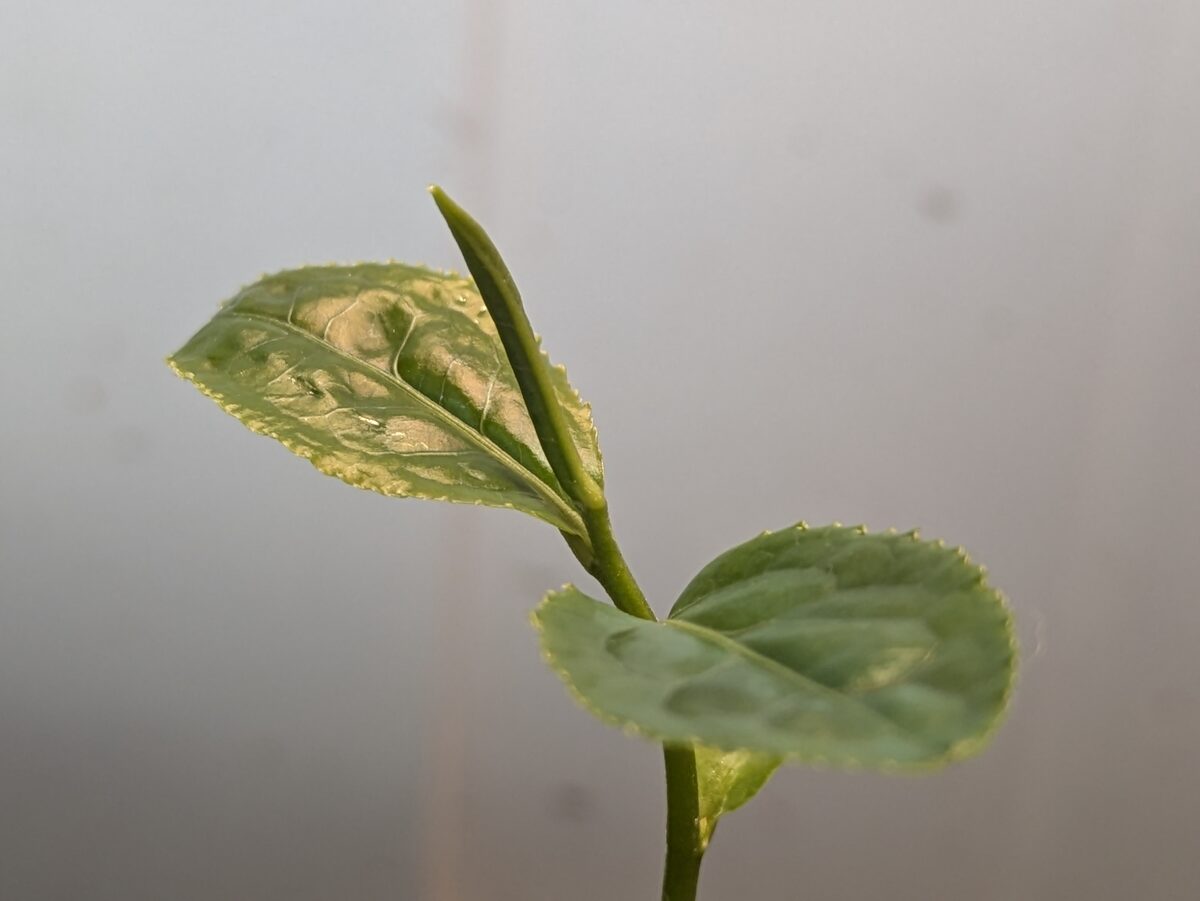
The plant that produces all true tea — green, white, oolong, black, and pu-erh all come from this species, differing only in how the leaves are processed. Hardy to zone 7 and manageable in containers, making it viable outside its typical range with some protection.
Seeds sourced from Camellia Forest Nursery, received February 17, 2026.
Propagation Log
February 17, 2026 — Seeds Received
Seeds received from Camellia Forest Nursery. Soaked for 8 hours to soften the seed coat and improve germination rates.
February 20, 2026 — Sown
Planted into cone-tainers in a plastic bin. Mix: coco coir, perlite, and vermiculite — perlite and vermiculite used more heavily at the top of the cones for drainage. Kept cold and moist during the pre-germination period. Bin kept closed to retain humidity.
March 6, 2026 — First Germination
First green stem emerged. Seeds began breaking dormancy.
March 11, 2026 — First Leaves
First true leaves appeared.
March 19, 2026 — Update
34 seeds germinated with more emerging daily. Tallest seedling just over 1 inch with 6 leaves. Seedlings moved to a humidity box under grow lights after germination. Keeping media consistently moist throughout.
April 3, 2026 — Dark Variant Observed
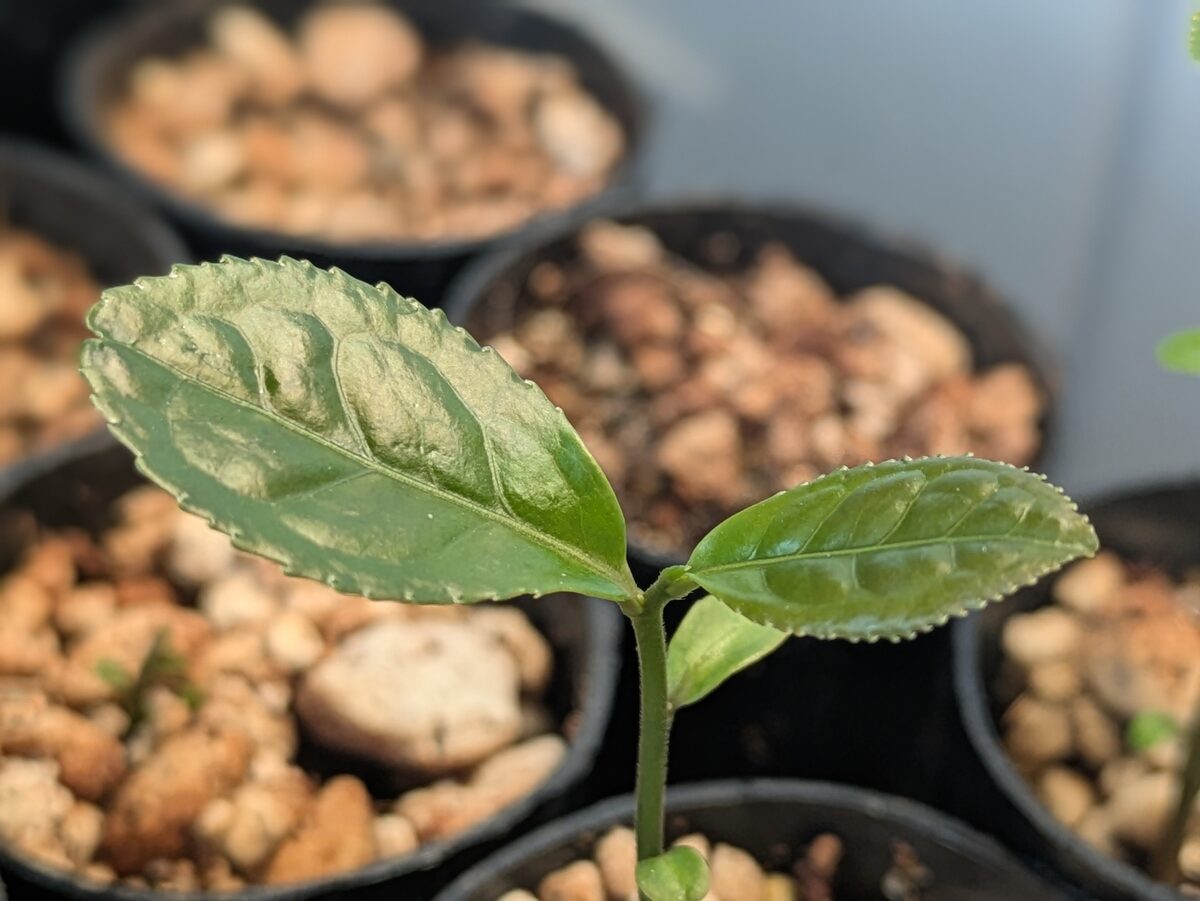
One seedling stands out significantly from the rest: deep burgundy-red pigmentation on the stem, petioles, and newer leaves, present since emergence and consistent through each growth stage. The coloration is not stress-related — it has been stable from the start while surrounding seedlings remain fully green. It is also the only individual in the batch to produce a lateral shoot at this stage.
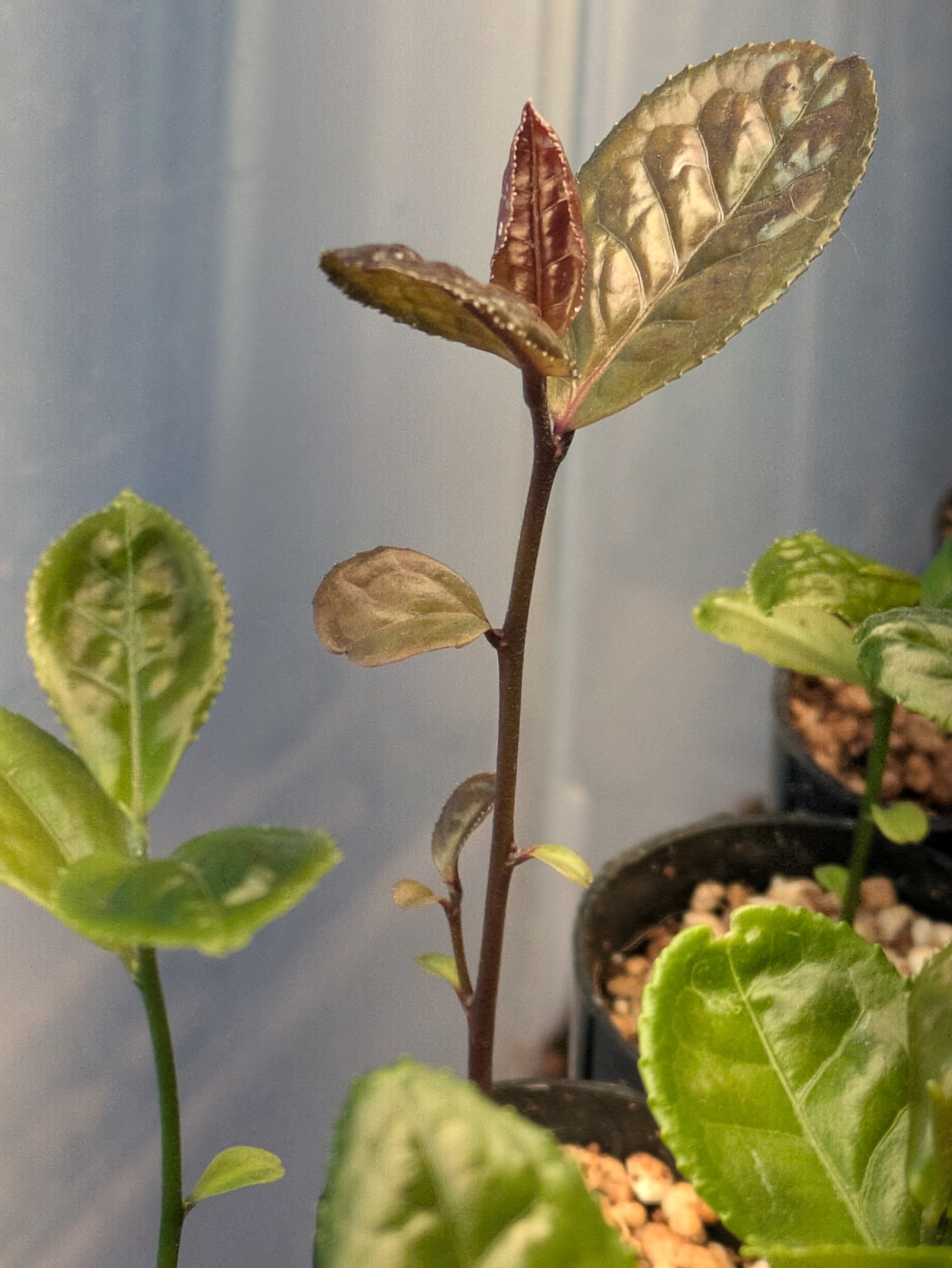
Worth isolating and tracking. Anthocyanin expression at this level in C. sinensis can indicate higher antioxidant content in the leaf — some purple-leafed tea cultivars are selected specifically for this trait. Whether this stabilizes in mature foliage or fades as the plant matures remains to be seen.
Care
Requires acidic soil (pH 4.5–6.0); coco coir and peat-based mixes work well in containers. Water consistently — allow the surface to dry slightly but do not let the root zone dry out completely. Feed with an acidic, slow-release fertilizer in spring and early summer. For leaf harvest, pick the top two leaves and bud when growth is actively extending — the youngest growth produces the most delicate tea. Protect from hard freezes while young; established plants in zone 7 can tolerate brief periods below 10°F with shelter. Container plants overwinter well indoors in zones below 7.
Source: NC State Extension Plant Toolbox — Camellia sinensis
Container Notes
Well-suited to container growing, which allows overwintering indoors in colder zones. Prefers acidic soil (pH 4.5–6.0) — the coco coir base is a good start. Will need repotting as seedlings establish.